
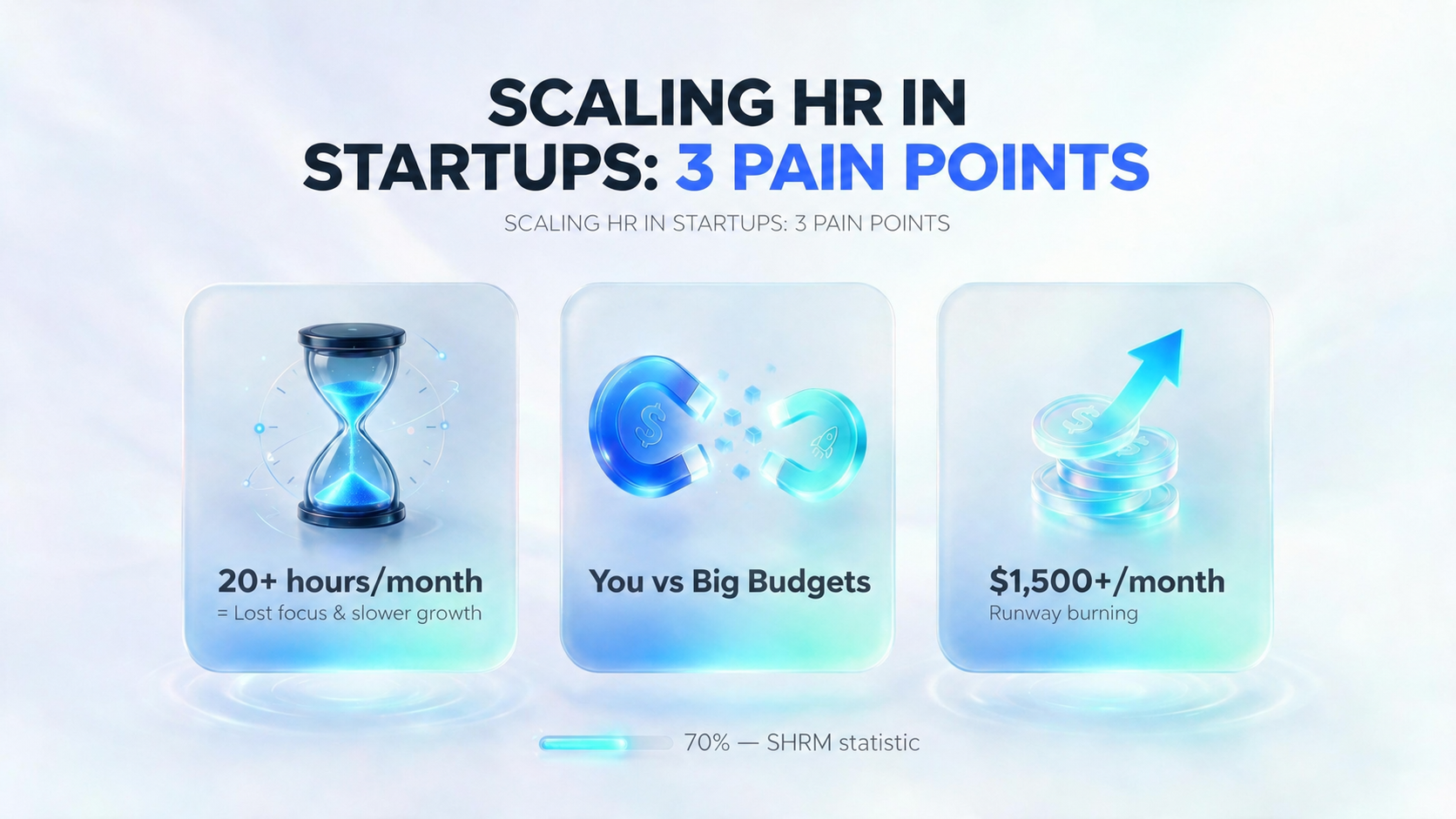
Scaling a business in the digital environment? Research indicates that a substantial majority of human resources professionals, approximately 70%, identify hiring as their most significant operational concern.
Data from the Society for Human Resource Management (SHRM) suggests that nearly three-quarters of organizations grapple with the complexities inherent in the recruitment process. Analysis from LinkedIn further corroborates this trend, highlighting an unprecedented level of competition for skilled individuals in the current market.
But here's what most startups miss: these aren't temporary headaches. They're structural.
Three core problems typically manifest:
1. Time drain.
Significant time expenditure associated with hiring presents a considerable drain. Founders or early-stage HR personnel may dedicate upwards of 20 hours per month solely to recruitment activities. Conservatively estimating the opportunity cost at $1,500 or more per month. For a team of 5, it multiplies fast, impacting productivity and strategic focus.
2. Talent wars.
SMB are often engaged in a fierce competition for talent, often referred to as a "talent war." They contend with established corporations that possess robust employer branding and substantial financial resources. Primary competitive advantages in this scenario are typically speed of execution and the ability to secure candidates who represent a genuine cultural and functional fit for the organization. However, many companies falter in effectively leveraging these advantages, leading to missed opportunities in securing top-tier talent.
3. Cost creep
The financial implications of an inefficient hiring process can be substantial. Costs associated with recruitment agencies, specialized hiring software, the financial impact of failed hires, and delays in onboarding new employees all contribute to a significant drain on a company's financial runway. The duration for which a critical role remains unfilled directly translates into lost revenue potential and decreased operational efficiency, underscoring the financial imperative of a streamlined hiring process.
The failure of SMB in scaling their hiring efforts often stems not from a lack of a defined strategy but from deficiencies in execution. This includes the absence of established processes, insufficient visibility into the hiring pipeline, and the lack of appropriate technological tools to manage the complexities of growth. Addressing these operational gaps is as critical as formulating the initial strategy.
— Maxim Berg, Founder HRPulsar
For businesses managing their human resources functions, particularly those relying on manual methods like spreadsheets, adopting more specialized tools may be beneficial.
HR Pulsar has been developed to address the needs of teams ranging from 3 to 250 individuals. It offers a functional free tier, providing monthly credits sufficient for smaller teams to manage hiring, onboarding, and team data tracking without incurring costs. This offering continues without hidden fees as the team grows to 50 employees.
Furthermore, the platform is designed with founders in mind, aiming for ease of use without requiring specialized HR expertise